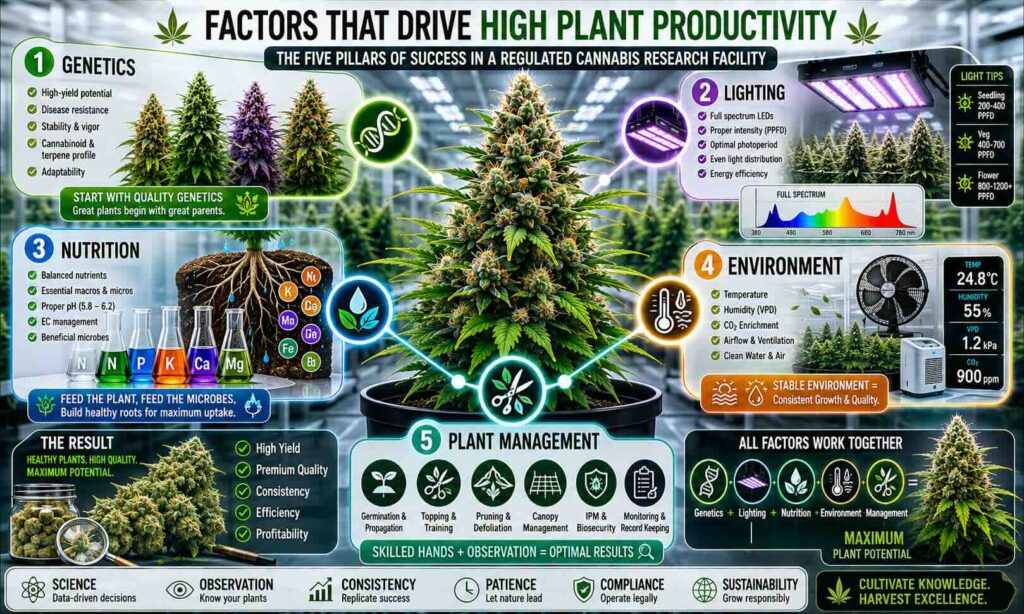
Cannabis yield is one of the most discussed topics among growers. Whether cultivating on a small scale or managing larger projects, understanding the factors that influence production can help growers make more informed decisions throughout the cultivation cycle. While many people focus on a single variable when evaluating yield potential, successful cultivation is usually the result of multiple factors working together.
Genetics, environmental conditions, plant health, cultivation techniques, and overall management practices all contribute to final results. By understanding how these elements interact, growers can better appreciate the complexity of cannabis cultivation and the importance of careful planning.
Genetics as the Foundation of Yield
Genetics remain one of the most important influences on cannabis production. Every cultivar contains a unique genetic blueprint that determines its growth characteristics, structure, vigor, and overall potential.
While cultivation techniques can help optimize plant development, genetics establish the limits within which a plant can perform. Some cultivars naturally develop larger structures, while others prioritize compact growth patterns. Understanding these genetic differences helps growers select cultivars that align with their cultivation goals.
Stable and professionally developed genetics often provide greater consistency and predictability throughout the growing cycle.
Strong results usually begin with strong genetic foundations.
Environmental Conditions and Plant Development
Environmental conditions have a major influence on plant growth. Light intensity, temperature, humidity, airflow, and root-zone conditions all contribute to overall plant performance.
Cannabis plants rely on a balanced environment to support healthy development. When environmental conditions remain within suitable ranges, plants can focus their energy on growth and reproduction rather than responding to stress.
Environmental management is especially important because it influences how effectively plants can express their genetic potential. Even exceptional genetics may struggle under unfavorable conditions.
Consistency often plays a larger role than extreme optimization.
The Importance of Plant Health
Healthy plants are generally more capable of reaching their potential than plants dealing with stress or imbalance. Nutrition, irrigation practices, root development, and overall plant vitality all contribute to successful cultivation.
Maintaining plant health throughout the entire life cycle helps support vigorous growth and stable development. Small problems that occur early in cultivation can sometimes affect performance later in the season.
Regular observation allows growers to identify issues before they become more significant. Preventive management often proves more effective than corrective measures.
Healthy plants provide a stronger foundation for productive cultivation.
Cultivation Techniques and Canopy Management
Various cultivation techniques can influence how plants develop and utilize available space. Training methods, pruning strategies, canopy management, and environmental organization all affect how efficiently plants grow.
Different cultivars often respond differently to cultivation techniques. Understanding plant structure and growth behavior allows growers to apply methods that complement the genetics being cultivated.
Growers interested in exploring modern autoflowering cannabis genetics can learn more through Ministry of Cannabis. Understanding the relationship between genetics and cultivation practices helps growers make better decisions throughout the growing cycle.
Careful planning and consistency often contribute significantly to long-term success.
Experience and Long-Term Improvement
Experience remains one of the most valuable resources available to growers. Over time, cultivators develop a better understanding of how genetics, environment, and management practices interact within their specific setup.
Keeping records and evaluating results from previous cycles can help identify opportunities for improvement. Small adjustments made consistently over time often produce meaningful improvements in cultivation performance.
Additional information regarding cannabis legislation and CBD-related topics can be explored through https://mamakana.com/blog/legislation-cbd.
Continuous learning remains one of the most effective ways to improve cultivation outcomes and maximize the potential of available genetics.
Final Thoughts
Many factors influence cannabis yield, and no single element determines success on its own. Genetics, environmental conditions, plant health, cultivation techniques, and grower experience all contribute to final results.
By focusing on the complete cultivation process rather than a single variable, growers can create more consistent conditions and better support plant development. Understanding how these factors interact helps build a stronger foundation for successful cannabis cultivation in any environment.